Showing posts with label NYTimes. Show all posts

Friday, September 26, 2014

The People's Climate March, a Recap

Over the weekend, I went to the People's Climate March. I went alone, one of more than 300,000 people who attended the New York City event (similar marches were staged in cities around the world), and was warmly welcomed by perfect strangers, from climate scientists to concerned parents pushing baby strollers. There was universally an acknowledgement of solidarity, of common and overarching cause. There was a determination that the United Nations should hear us, on the weekend of the Climate Summit.

The March spanned more than fifty blocks on Manhattan's West Side, from 86th Street down to 34th Street. I joined about halfway through, having rushed across the river from the Brooklyn Book Festival, which was unfortunately on the same day. I tried to document what I could; my batteries gave out partway through...


I took this photo from just outside the barricade; it gives a good sense of the density of marchers along the route.


Marchers flocked to New York from colleges and universities throughout the Northeast, bringing handmade signs, slick printed banners, and matching t-shirts. (You know it's a real campus group when it has special t-shirts!)


There were also members of a diverse array of disproportionately-impacted communities, from indigenous populations to farmers to anyone who happened to live in a low-lying coastal region, included most Hurricane Sandy victims in the tri-state area (an unsurprisingly well-represented group).


Activists of all ages carried signs and slogans, and looked pretty happy to be here. It wasn't just young, idealistic college students!


These marchers, though, look like young, idealistic college students... The "fill-in-the-blank" signs were handed out to marchers at the beginning of the day. There was a wonderful diversity of answers, from the indisputably factual to the unflinchingly personal.


There were some interesting pieces of green technology along for the ride. I was especially taken with this tiny solar-powered vehicle, which reminded me of a cross between a VW Beetle and a golf cart. (It was moving at slow enough speeds that children could clamber on.)


I fell in with a group of scientists, some of whom had come all the way from the U.K. to participate in the march. They had an incredible prop: an enormous rolling blackboard covered in real data. The evidence was clear, from more than ten feet away!


And of course, the scientists came prepared with clever exoplanet jokes.


This photo was taken towards the end of the march, as the afternoon was just giving way to early evening. As the lighting is lacking, the signs read "Tuvalu," "Save the Arctic," and "Stop the tar sands at the source." This was indeed the delegation representing the tiny Pacific archipelago of Tuvalu, which is in danger of being submerged by rising sea levels. Some of them probably came a very long way to be heard in front of the United Nations.

As for the media round-up, my favorite pieces about the March:

  • The New Yorker ran an excellent article about the event, as well as a interview with the environmentalist and scholar Bill McKibben, one of the primary organizers of the March.
  • The New York Times also covered the March, including audiovisual material that gives a great sense of the numbers and diversity of the marchers. A follow-up article provided deeper analysis of the economics behind climate change mitigation.

The U.N. appears to have gotten the message -- but it remains to be seen in the months and years ahead how seriously its member states take their new vows on climate action. It will require intricate policy and sustained initiative to see them through the vagaries of politics, of course. But no country can claim that its citizens do not care or will not be affected by climate change.

Monday, December 30, 2013

NYTimes: (Middle) East Meets West

I recently saw the film "American Hustle" (quite good, I would recommend it), in which there's a con involving an Arab oil magnate in Atlantic City, and I thought of this New York Times article about Middle Eastern investors doing business in the West:

http://dealbook.nytimes.com/2013/12/25/islamic-banks-stuffed-with-cash-explore-partnerships-in-west/?hp

I find the crossroads of disparate cultures fascinating (possibly because I occupy one such intersection myself). There's always a certain contentious power dynamic, no matter how seamless each side wants their dance to be -- it's simply a matter of navigating cultural differences, and where there's difference, there's compromise to be reached.

In the cases mentioned in the above article, it's a matter of Islamic law, which to Westerners accustomed to separation of Church and state, seems antiquated and alien. Of course, considering that American bills still have "In God We Trust" printed on them, we're not 100% secular either. The United States is just a less homogenous society, which means that it's much harder to enshrine any particular religious practice as law without provoking backlash from other religions. In the Middle East, on the other hand, Islamic tenets -- such as the prohibition on interest payments, for example -- are so ingrained in the legal system, in everyone's day-to-day operations, that it would hardly seem out of the ordinary for Islamic companies to request certain religious accommodations as part and parcel of doing business.

Each side tends to think of itself as "normal" and everyone else as "other." That's just how we're wired--it was an evolutionary advantage, to be sure, and we've remained so long after our species abandoned the "small tribes roaming the Serengeti" lifestyle. It's a product of genes ensuring their own survival, methinks, and it has been the root cause of a lot of conflict through the centuries (and even today). But in a world where it is generally acknowledged that outright war between states is undesirable for all states in question (with certain notable exceptions, many of them precipitated by stateless organizations or religious factions), I suppose a lot of that cultural distance gets sublimated into power plays in negotiation (and similar, otherwise constructive enterprises).

I expect we'll see more and more of this in our increasingly globalized world. Today, it's not just governments that engage with each other -- it's entire populations that have to reconcile "us" and "them."

Monday, July 1, 2013

R.I.P. Met Admissions Tags

Just a few days after my trip to the Met, I saw this article in The New York Times:
http://www.nytimes.com/2013/06/28/arts/design/metropolitan-museum-sheds-its-metal-admissions-tags.html?hp

Starting today, the Met is retiring its iconic metal admissions tags in favor of admissions stickers. While it's a logically sensible decision, the child in me mourns the passing of an era. I hung out at the Met in high school (I probably went there about as often as most normal girls went to the mall), and amassed quite the collection of Met tags:


Yes, I have a special bowl for them. I think I'm still missing one or two of the "official" colors (and I likely have a few colors that have since been discontinued):


It'll be a bit of an adjustment next time I go -- I'll receive a sticker, and stare at it for a second in bewilderment, before realizing that the colored tags with their Leonardo Ms are no more.

Monday, February 11, 2013

NYTimes: Richard III, Lost and Found

In recent news -- making both archaeological and regular news headlines around the world -- the bones of Richard III were discovered under a parking lot in Leicester:

http://www.nytimes.com/2013/02/05/world/europe/richard-the-third-bones.html?hp

I'm inclined to be more sympathetic towards Richard III than literature portrays him (Shakespeare's play was an instrument of the Tudor smear campaign against the Plantagenets). He probably suffered from "younger sibling syndrome," as did many "spare heirs" of monarchs in the Middle Ages -- see Scar vs. Mufasa in The Lion King (and play "spot the Shakespeare references"). This was also probably exacerbated by his uninspiring physical appearance -- see Tyrion Lannister in George R. R. Martin's A Song of Ice and Fire series. (Especially in those days, physical birth defects were seen as portents of ill fortune.) Richard came by the throne in a slightly roundabout way that involved some unsavory tactics; certainly, he can't have been completely innocent in the Princes in the Tower episode. But he was by and large a competent administrator who contributed significantly to the nascent English legal system and, notably, lifted most public and private censorship of written work -- not a move to be taken lightly, especially given the political turmoil surrounding his ascension and reign. He was ruthless, to be sure, sometimes excessively so, but his were much more violent times. (Nasty, brutish, and short would be about right.) Richard III was not, among his peers, particularly remarkable in his ruthlessness -- which the Tudors, Shakespeare, and partisan historians conveniently forget.

Anyhow. I imagine it must have been a fascinating experience for the modern-day descendants of Richard III, a few of whom contributed some DNA to the project.

Wednesday, December 26, 2012

NYTimes: A Religious Perspective on the Newtown Massacre

I have, on occasion, made my views on religion known to readers of this blog. (I don't think religion and politics should be taboo topics of conversation, so long as disagreements are civil and rational.) I consider myself secularly spiritual.  I personally think of religion as a blend of mythology and morality, but I have great respect for religious people who live by the true tenets of their creed (which I don't think include holy wars, persecution of minorities, or evangelism), and I believe that the hearts of most religions are benevolent and peace-loving. I appreciate the value of the moral guidance and comfort that religion can bring to believers in difficult times. This is an example of such:

http://www.nytimes.com/2012/12/26/opinion/dowd-why-god.html?hp&_r=0&gwh=02A7DB3DBD76598A7F25B51569ED6491

This man reminds me of Victor Hugo's Bishop of Digne, one of the first and finest examples of religious men I'd encountered.

Merry Christmas.

Sunday, December 9, 2012

Social Dance in New York

One of the things I miss most about college is social dance. I was told by people in the Bay Area dance community that there is little waltz in New York, but a lot of good swing dancing. I've attended exactly one dance event in the city thus far; I enjoyed it, even though the turnout was unusually low (thanks to a rainstorm), but noticed that the style here is rather different (more structured, for one).

I came across this article about swing dancing in the city:
http://www.nytimes.com/2011/12/23/arts/dance/swing-dance-clubs-go-retro-in-new-york-city.html?pagewanted=all&_r=0

Of course, this means I'll have to really learn how to swing if I'm to dance here. (I know enough to hold my own for a few dances, but I was always more of a waltz person.) There are also classes at a lot of New York dance halls, but that's a whole other level of commitment.

Saturday, June 9, 2012

R.I.P. Ray Bradbury

He died this week (on the 5th). The New York Times obituary:
http://www.nytimes.com/2012/06/07/books/ray-bradbury-popularizer-of-science-fiction-dies-at-91.html?_r=1&ref=arts&gwh=DAB304701677810DA93A673A1510F1D2

I first learned of it from Neil Gaiman's blog, actually. He was tapped to write a tribute piece in The Guardian, and he paints a beautiful portrait of this science fiction maestro:
http://www.guardian.co.uk/books/2012/jun/06/ray-bradbury-neil-gaiman-appreciation

We all knew that Bradbury was a pioneer of the genre. We all admired his skill, his imagination, his understanding of human nature. This reveals a side of him that, sadly, many of us never encountered -- the genuine, kind human being. People like that are precious.

Here's another:
http://www.bbc.com/future/story/20120608-meeting-the-master-ray-bradbury

I love his devotion to the book as an object (something I'm more than a little afraid that e-readers will kill off), especially seeing as he was a science fiction writer. (I have an e-reader, but I feel the same way about books, which increasingly makes me appear a troglodyte among my peers.) I love his enthusiasm. And of course, as Gaiman so eloquently depicted it, his kindness.

Rest in peace, Mr. Bradbury.

Friday, April 27, 2012

NYTimes: A Quantum Theory of Mitt Romney

I spotted this article a few weeks ago. The little part of me that loves theoretical physics (I list Dyson and Feynman among my favorite authors, yes) thinks this is the wittiest political commentary of the election cycle:

http://www.nytimes.com/2012/04/01/opinion/sunday/a-quantum-theory-of-mitt-romney.html

Something (okay, quite a few things) about Romney just doesn't sit right with me. Probably all the hot air.

Tuesday, March 13, 2012

R.I.P. Encyclopaedia Britannica

A sad day indeed:
http://mediadecoder.blogs.nytimes.com/2012/03/13/after-244-years-encyclopaedia-britannica-stops-the-presses/

We have an old set of the Encyclopaedia Britannica at home. It's from the 1980s, I believe. I was given it by my godparents after their daughter moved out, and it's been ensconced in a place of honor on the mantlepiece above the fireplace ever since. I remember using them as reference materials, of course, but more than that, I used to go downstairs and read an entry once in a while, just for fun (and to procrastinate on homework). It was a bit like the low-tech version of the Wikipedia game. I think it was one of the main reasons I was decent at trivia and parlor games, even though I generally fall flat on popular culture (a rather massive quiz bowl weakness, if you're playing individually).

We never did get another set -- which was probably a financially sound decision. I'm glad to have the one we do, and it saddens me that future generations of children might not have the opportunity to leaf through the Britannica on rainy afternoons. I thought nothing of it at the time, which was exactly the point -- such a pastime should be commonplace, and it won't be, anymore.

Sunday, March 4, 2012

NYTimes: Genes on the March

A very interesting, if somewhat inaccurate (well, I'm just being nitpicky here) piece on genetic history, à la Mongolian warlord: 
http://opinionator.blogs.nytimes.com/2012/03/03/genes-on-the-march/?hp

There's likely Khan blood somewhere in my family, though the probability's lower than that of the average Chinese, seeing as we're from the south. Even if there were, though, I doubt any of my relatives would be too pleased, given the most logical method of transmission, as it were.

Wednesday, February 8, 2012

NYTimes: High Fashion in Silicon Valley

I'm a huge fan of brightly coloured, patterned, mismatching, or otherwise unusual socks. I wear them not only with sneakers, but also with sandals. Seems like I'd fit right in -- maybe there's a reason I go to Stanford. :)

http://www.nytimes.com/2012/02/05/fashion/in-silicon-valley-socks-make-the-tech-entrepreneur.html?hpw

To all of my techie friends -- I know what I'm getting you for Christmas next year!

Tuesday, February 7, 2012

The Stanford Daily: Ann Patchett at Stanford

Ann Patchett came to lecture on campus last week. She's one of my favorite living authors (I definitely had a geek-out moment when she was signing my books!), and she's also a wonderful speaker. Anyhow, I got to cover her lecture for my column:

http://www.stanforddaily.com/2012/02/03/book-critiqua-ann-patchett/

Not only is she a bestselling author, she's also an indie bookstore owner; the write-up in The New York Times is here:

http://www.nytimes.com/2011/11/16/us/ann-patchett-bucks-bookstore-tide-opening-her-own.html?ref=books

I especially loved her line, from her talk, about how her bookstore was "her gift to the city she loves" (Parnassus Books, in Nashville).

Thursday, November 24, 2011

NYTimes: What's in a Name?

Seeing as it's Thanksgiving -- a celebration of family and loved ones -- I thought that this would be an appropriate article to post; it's an observation on an inevitable quandary in naming trends, given recent (within the past several decades) developments in gender equality and increasingly diverse modern familial structures:

http://www.nytimes.com/2011/11/24/fashion/babies-surnames-to-hyphenate-or-not.html?_r=1&ref=fashion?src=dayp

I've given this a fair bit of thought. As a heterosexual female, Western social customs would have me relinquish my surname in favor of my hypothetical husband's, if I were to marry at some point in my life. I'm not so keen on that, myself; I'm rather attached to my last name. It has a history behind it, a connection to generations of family and culture.

Ergo, one of my goals in life is to achieve a level of "success" (definition variable) such that if the time comes, it would appear to be logical (rather than vain or self-serving) to keep my surname. It's rather sad that society is still at a stage where a woman needs a reason to keep her maiden name, while a man may do so merely by virtue of his Y chromosome. I hope that someday, English-speaking society will have progressed such that women keep their own names as a matter of course, and some equitable system exists whereby children's surnames are evenly distributed between their sire and dam.

I'm not sure about hypothetical children (haven't given them much thought -- I'm many years too young for that!) but I imagine it would depend a lot on the ethnic origins of their father. Surnames in some languages lend themselves more readily to hyphenation than those in others. I'd want them to have a Chinese name, too. If the father were non-Chinese, I'd like to give them my own Chinese family name to use in contexts that would require it; phonetically deriving one from the father's surname seems a little cheap, next to a name with history and family.

Interestingly, in Chinese society, women retain the use of their maiden names throughout life; it's only when referring to them specifically as "wife of so-and-so" that they go by the equivalent of "Mrs." Gender equality is, in some respects (this is a pretty significant caveat), more apparent in modern Chinese society (i.e. beginning with my generation). I think it has a lot to do with the One Child Policy, in that if parents have only one child, they will give it the best they can in the way of opportunity and attention. There is much less opportunity for parents to favor sons over daughters (after the birth of the child; female infanticide is still a problem in some areas), because they typically only have one child to dote upon. The surname given to the child is still the father's, so it's not a perfect system, by any means, but in this specific practice, it's a bit closer to gender equality than in English-speaking countries.

Thursday, November 10, 2011

Page One, a Documentary

I attended an on-campus screening of the documentary Page One: Inside the New York Times (co-sponsored by The Stanford Daily and the communications department, I think) today. It was, I believe, showing at a number of smaller theatres over the summer, as well as at Sundance. I enjoyed it -- it was at once realistic and optimistic, and quite well-made, besides.

The heavy focus on the advent of citizen journalism and the much-hyped "death of (print) newspapers" mirrors the self-publishing and e-book issues in book publishing today -- something that I know better than I do than the news industry. In both cases, it's a matter of negotiating relatively peaceful change, especially where technology is concerned, under threat of obsolescence. News media, methinks, is less hidebound than book publishing in that regard.

It was interesting to note that much of the citizen journalism going on today is responsive and aggregative -- that is, bloggers and websites responding to reporting by traditional media outlets, and aggregating material from professional news media. Citizen journalism is just not sufficiently reliable and or comprehensive, at least not yet -- and I'm not convinced that it will ever be, because consistent, good, and consistently good journalism requires infrastructure (which in turn requires the sort of resources that civilian journalists can rarely access) and training (which is usually acquired at journalism school and/or through working in the field, under the guidance of more experienced journalists). Certainly, there are isolated incidences in which passersby on the ground are first to gain access to material simply because the spontaneity of some news precludes real-time coverage. But on the whole, I think the documentary has proven that professional journalism is not dead.

Thursday, October 6, 2011

R.I.P. Rev. Fred Shuttlesworth

Civil Rights activist Rev. Fred Shuttlesworth passed away yesterday: http://www.nytimes.com/2011/10/06/us/rev-fred-l-shuttlesworth-civil-rights-leader-dies-at-89.html?ref=obituaries

I had the great honour of meeting him half a decade ago, when I was in high school, through a wonderful program called Sojourn to the Past. He was a warm, genuine person, who despite his age and vast life experience, took the time to speak with a bunch of students, to pass along the torch that he had borne so faithfully his entire life. He was truly an inspiration, and the world is a little less bright for his passing.

Wednesday, October 5, 2011

R.I.P. Steve Jobs

The visionary of Apple died today: http://www.nytimes.com/2011/10/06/business/steve-jobs-of-apple-dies-at-56.html?_r=1&hp

I'm an Apple user. I'm typing up this very post on Mycroft, my Macbook. I've had one Macbook before him (a black one, named Marvin), I use an iPhone, and I have used various iPods before it. I have a distinct, albeit annoyingly unquantifiable, preference for Apple products (as opposed to comparable computers and phones) -- that's part of the magic.

There is little I can say about Steve Jobs that has not already been said. But I think that one of his greatest accomplishments is taking everyday, functional items -- the personal computer, the phone, the music player -- and making them beautiful. An often overlooked piece of his background: he audited a calligraphy class once, in college. This led to the diverse palette of computer fonts we have today. It's the little things like this that made him great; he didn't invent the computer, but he brought to it a certain irresistible aesthetic. Sometimes, it's all in the details.

Edit (11/28): William Gibson says it better, at http://imgur.com/hu40O

Thursday, September 15, 2011

NYTimes: Odd Exceptions in the Family Planning Rulebook

An interesting article, especially given the friends I made in China, all of whom were only children:

http://www.nytimes.com/2011/04/07/world/asia/07sidebar.html

The last line is so ridiculously illogical that I nearly spewed tea on the keyboard. Really? That's what ultrasounds and amniocentesis are for. It's not as though the Chinese have anything against abortion, by and large.

I can see the logic to both sides of the One Child Policy debate. China's huge population means that some method of restricting population growth is necessary (especially in the days when it was first enacted). At the same time, the lack of a social safety net, especially provisions for the elderly, mean that the burden falls on the children to care for their aging parents -- which, traditionally, has been the case, but which has been exacerbated by the lack of siblings with whom to divide this often significant burden. Obviously, parents would want to have multiple children, which means exploiting whatever loopholes are available to them -- including, apparently, nonexistent disabilities. (Also, there's the not insignificant problem of favoring male children over female ones, especially in a culture that's still somewhat traditional.)

I imagine that as China's population stabilizes, the state-mandated controls on childbirth will ease up. Legislation (of the sensible variety) seems to be moving in that direction; for example, if both parents are only children, they are permitted two offspring. In some ways, it's a more extreme, top-down version of natural, self-correcting fluctuations in ecological population density; instead of massive infant mortality and starvation, the government is heading of the problem at conception. Now, as the population is stabilizing, hopefully the Chinese government is recognizing these shifts and scaling back their artificial restraints.

Wednesday, September 7, 2011

NYTimes: Atlantis, or, the End of an Era

The last mission of the NASA space shuttle program departed today:

http://www.nytimes.com/2011/07/09/science/space/09shuttle.html?_r=1&ref=global-home

I realize I'm unusually nostalgic when it comes to space exploration, and the shuttle in particular (I discuss it in a previous post, which, ironically, is about what was projected to be Atlantis's last flight.), but I still can't quite believe that the last shuttle is being decommissioned.

NASA is exploring alternatives in human spaceflight, but it will be a long while before the United States achieves anything close to its shuttle-based capabilities with other technologies. In the interim, I would be concerned for the space program, especially its ability to make an impression on potential recruits. Nothing inspires starstruck kids as much as human spaceflight -- I would know (as a child, I harbored dreams of becoming an astronaut).

While private ventures, like SpaceX, are doing an admirable job of innovating for the next generation of human spaceflight, much like the European explorers setting sail in the 1600s who were often funded by merchants and investors, they ultimately still need the backing of a government that can chart the course of not one mission, but an entire exploration program. Since human spaceflight does not produce immediate profits, require a longer view than most private ventures can tolerate, and involves more intricate international (political) interaction than most other industries, the government's role is still critical.

Let's see what takes the place of the space shuttle. In the hearts and minds of many space enthusiasts, it will continue to represent an era of great accomplishments and greater dreams.

Or, this Abstruse Goose, anyone?

Sunday, August 7, 2011

NYTimes: Book Tours at Google

Who says fuzzies and techies don't mix? This article says otherwise:

http://www.nytimes.com/2011/05/13/us/13bcgoogle.html?src=recg

Google seems like a great place for authors to stop on tour, precisely because it (and Silicon Valley in general) has this pseudo-college campus feel. Just like at university, where students are encouraged to attend lectures and presentations outside of their specialties and even their comfort zones, it seems like these author talks are a way for techies to branch out after college. (I imagine these sorts of events are among the parts of college I'll miss most.) And given all the smart, literate (and nerdy) people at a place like Google, I'll wager the audience is perfect for book talks.

Tuesday, July 12, 2011

Time: A Dance with Dragons!

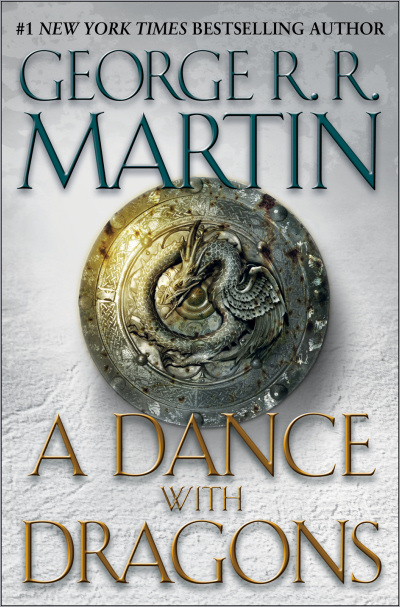
The long-awaited A Dance with Dragons is out today!


Lev Grossman reviews it for Time, here:
http://www.time.com/time/arts/article/0,8599,2081774,00.html

I'm really glad to see that it lives up to all the hype. I know a lot of people (myself included) were a bit disappointed with A Feast for Crows, but I think a lot of the problems with it were simply due to its not being a single complete volume unto itself. It and Dance are really two very intertwined halves of the same volume. So this book should make it all better.

I can't wait to start reading it after work! (My own review thereof, for The Stanford Daily, is forthcoming.)